Disclaimer: This content is for informational purposes only and does not constitute medical advice. Consult a qualified healthcare professional before any new wellness program. Results vary.
Disclaimer: This article is for informational purposes only and does not constitute medical advice. Always consult a qualified healthcare professional before beginning any new wellness program. Results vary.
Sound has been used as a healing tool by human civilizations for thousands of years. But in 2026, the scientific conversation around sound therapy for the brain has moved well beyond ancient tradition into peer-reviewed neuroscience research — and the findings are genuinely compelling.
If you have ever felt calmer after listening to music, sharper after a particular rhythm, or strangely alert after certain sounds, you have experienced a mild version of what sound therapy researchers study professionally. This article explains what sound therapy actually is, what the science says about its effects on focus and brain function, and how modern audio-based tools are designed around these principles.
What Is Sound Therapy?
Sound therapy is a broad term covering any wellness practice that uses deliberate, structured audio input to influence brain states, emotional regulation, or physical relaxation. It encompasses everything from ancient practices like Tibetan singing bowl meditation to modern clinical applications using precisely engineered audio frequencies.
For brain health specifically, the most scientifically relevant forms of sound therapy involve brainwave entrainment — the use of rhythmic audio signals to guide the brain's own electrical activity toward specific frequency states associated with focus, relaxation, creativity, or sleep.
How Does Sound Affect the Brain?
The brain constantly produces electrical oscillations — patterns of neural firing that can be measured on an EEG. Different frequency ranges correspond to different cognitive and emotional states. When the brain is exposed to external rhythmic stimuli — including rhythmic sound — it has a documented tendency to synchronize its own electrical activity to match those rhythms. This is called the frequency-following response.
The frequency-following response is not a fringe theory. It is a well-established neurological phenomenon that forms the scientific foundation for auditory brainwave entrainment. By delivering precisely calibrated audio rhythms, sound therapy tools aim to guide the brain toward target frequency states — whether that is the calm alertness of alpha waves, the focused clarity of beta waves, or the high-performance engagement of gamma waves.
The Four Main Brainwave States and What They Mean for Focus
- Delta (0.5–4 Hz): Deep dreamless sleep. Critical for physical restoration and immune function. Disruption of delta sleep is associated with cognitive fatigue.
- Theta (4–8 Hz): Drowsy relaxation, light sleep, deep meditation, and creative insight. Some sound therapy tools specifically target theta for creativity support.
- Alpha (8–12 Hz): Calm, relaxed wakefulness. Associated with reduced anxiety, gentle focus, and mental clarity without effort. Often described as the "flow state" entry point.
- Beta (12–30 Hz): Active thinking, alert problem-solving, and task-focused concentration. Normal waking cognition operates largely in beta.
- Gamma (30–100 Hz): High-level cognitive processing, memory binding, and peak mental performance. Gamma oscillations are of particular interest in brain health research because of their associations with neuroplasticity and cognitive resilience.
What Types of Sound Therapy Exist for Brain Focus?
Binaural Beats
Binaural beats deliver slightly different tones to each ear through stereo headphones. The brain processes the mathematical difference between the two tones and produces a third "beat" that corresponds to the target brainwave frequency. For example, 200 Hz in the left ear and 240 Hz in the right ear produces a 40 Hz gamma entrainment effect. Binaural beats require headphones and have been studied in contexts including focus, anxiety reduction, sleep support, and meditation depth.
Isochronic Tones
Isochronic tones use rapid on-off pulses of a single tone at a specific frequency to achieve entrainment. Unlike binaural beats, they can work through speakers as well as headphones. Some researchers believe isochronic tones produce a stronger entrainment effect because the rhythmic pulse is more neurologically direct.
Monaural Beats
Monaural beats combine two slightly different frequencies in the same audio channel before it reaches your ears, producing an audible beat effect without requiring separate delivery to each ear. Like isochronic tones, they work through speakers or headphones.
40 Hz Gamma Stimulation Programs
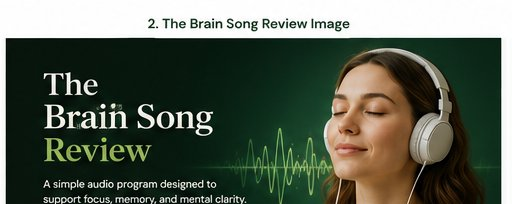
Perhaps the most scientifically prominent category in 2026 involves audio programs specifically designed to deliver 40 Hz gamma-frequency stimulation. Research from MIT and other institutions has found associations between 40 Hz sensory stimulation and neuroplasticity-related processes. Programs like The Brain Song and Genius Brain Signal are designed within this specific research framework.
Explore Audio Programs for Brain Wellness
The Brain Song and Genius Brain Signal are built around gamma frequency research — non-invasive, drug-free daily tools.
Affiliate links · Results vary · Not medical advice · Disclosure
What Does the Research Actually Show?
The honest answer is: the research is promising but still developing. Here is what can be said with reasonable confidence based on the available literature:
- Auditory brainwave entrainment is a real phenomenon — the brain does respond to rhythmic audio stimuli by modulating its own oscillatory activity
- Binaural beats have shown effects on anxiety reduction, focus, and meditation depth in controlled studies
- 40 Hz gamma stimulation has shown associations with neuroplasticity markers and neural maintenance processes in animal studies, with human trials ongoing
- Individual responses vary considerably — not everyone responds equally to the same audio stimuli
- Most studies involve relatively short intervention periods, and long-term effects in healthy adults are less comprehensively studied
Who Is Sound Therapy Best Suited For?
Sound therapy for brain focus may be worth exploring if you are an adult who wants a non-invasive, drug-free complementary approach to cognitive wellness, are interested in daily practices that may support focus and mental clarity, or are specifically curious about gamma brainwave research and its implications for brain health after 40. It is not a substitute for medical treatment, and it is not appropriate as a first-line intervention for diagnosed cognitive conditions.
How to Evaluate a Sound Therapy Program for Brain Health
Before choosing any audio-based brain wellness tool, ask these questions. Does it clearly disclose the frequencies used and the scientific basis for its design? Does it carry realistic health claims using compliant language rather than medical promises? Does it offer a satisfaction guarantee so you can evaluate it risk-free? Is it easy to integrate into a daily routine? The best programs are transparent about their science, modest in their claims, and practical enough to use consistently.
Our reviews of The Brain Song, Genius Brain Signal, and the broader comparison guide evaluate all of these factors.
Frequently Asked Questions
Related reading: Binaural Beats vs Isochronic Tones · Gamma Brainwave Benefits · What Is BDNF?