Disclaimer: This content is for informational purposes only and does not constitute medical advice. Consult a qualified healthcare professional before any new wellness program. Results vary.
Disclaimer: This content is for informational purposes only and does not constitute medical advice. Consult a qualified healthcare professional before starting any new wellness program. Results vary. Not evaluated by the FDA.
Neuroplasticity — your brain's ability to rewire, adapt, and form new neural connections — does not stop at 40. But without the right stimulation, it does slow. The good news is that specific, science-informed activities can meaningfully support your brain's plasticity at any age. Here are the most effective neuroplasticity exercises for adults over 40, ranked by evidence strength.
Understanding neuroplasticity is more than an intellectual exercise. It is the foundation for every practical brain health strategy available to you — because every habit, tool, or supplement that supports cognitive function ultimately works by influencing neuroplastic processes in some way.
What Is Neuroplasticity and Why Does It Matter After 40?
Neuroplasticity refers to the brain's ability to reorganize itself — forming new neural connections, strengthening existing ones, and sometimes even growing new neurons in key brain regions. For decades, scientists believed the brain was essentially fixed in adulthood. We now know this is wrong. The adult brain retains remarkable plasticity, and that plasticity is the biological basis of learning, memory, recovery from injury, and adaptation to new cognitive demands.
After 40, the brain's neuroplastic capacity does not disappear — but it becomes more influenced by lifestyle factors. Adults who consistently challenge their brains, exercise regularly, sleep well, and manage stress maintain significantly better neuroplastic capacity than those who do not. The difference is not inevitable aging. It is the cumulative effect of daily choices.
Exercise 1 — Aerobic Activity (Strongest Evidence)
Of all activities studied in relation to neuroplasticity, aerobic exercise has the most robust, consistent, and replicated evidence base. Research published in PNAS found that older adults who walked for 40 minutes three times per week showed a 2% increase in hippocampal volume over one year — effectively reversing 1–2 years of age-related hippocampal shrinkage. The mechanism involves increased BDNF production, improved cerebral blood flow, and reduced neuroinflammation.
You do not need to be a runner. Brisk walking, cycling, dancing, swimming, or any sustained cardiovascular activity for 20–40 minutes most days of the week delivers neuroplastic benefits. Consistency matters more than intensity. Related: How to Increase BDNF Naturally.
Exercise 2 — Learning Genuinely New Skills
The key word is genuine. When you learn something truly new — a language, musical instrument, coding, a complex craft — you force your brain to form entirely new neural pathways. This is structurally different from performing familiar tasks more efficiently, which relies on existing pathways. The novelty and challenge are essential. Research consistently shows that cognitive challenge produces more neuroplastic stimulus than cognitive performance.
Practically: choose something you find genuinely difficult. The discomfort of early learning is the neuroplastic signal. Once something becomes easy, it no longer provides strong plasticity stimulus — which means you need to keep advancing the challenge.
Exercise 3 — Mindfulness Meditation
Long-term meditators show measurable structural differences in brain regions associated with attention, emotional regulation, and memory — including increased cortical thickness in the prefrontal cortex and greater hippocampal gray matter density. Even short-term mindfulness practice has shown neuroplastic effects in controlled studies. The mechanism involves reduced cortisol (which otherwise suppresses neuroplasticity), increased attentional control, and what researchers call "top-down neural regulation."
Even 10–15 minutes of daily mindfulness practice — focused breathing, body scan meditation, or guided audio — can begin producing measurable neuroplastic changes within 8 weeks of consistent practice.
Support Your Brain's Plasticity With Proven Tools
The Brain Song and Genius Brain Signal are designed around gamma brainwave research — the same frequency range associated with peak neuroplastic states.
Affiliate links · Results vary · Not medical advice · Disclosure
Exercise 4 — Audio-Based Brain Entrainment
Gamma brainwave entrainment programs represent a newer category of neuroplasticity-supporting tools with an emerging but growing scientific foundation. Gamma oscillations — particularly at approximately 40 Hz — are associated with the neural states most conducive to neuroplastic activity, memory binding, and cognitive performance. Research from institutions including MIT has explored how 40 Hz sensory stimulation influences neural maintenance processes.
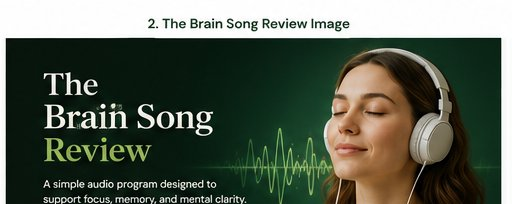
Programs like The Brain Song and Genius Brain Signal are designed around these principles. They offer a passive, accessible daily practice — 12–17 minutes of audio — that aims to support the brain frequency states associated with neuroplasticity. They work best as a complement to, not a replacement for, the active neuroplasticity exercises above.
Exercise 5 — Cross-Body Coordination Activities
Activities that require cross-lateral coordination — where both brain hemispheres must communicate — are particularly stimulating for neural connectivity. Dancing (especially partner dancing that requires improvisation), juggling, certain martial arts, and cross-body movement exercises all challenge inter-hemispheric communication in ways that rote, single-sided activities do not. These activities also tend to have social and enjoyment components that reduce cortisol — an additional neuroplasticity benefit.
Exercise 6 — Strategic Games and Complex Problem-Solving
Chess, bridge, complex strategy video games, puzzles with escalating difficulty, and structured problem-solving all provide genuine neuroplastic stimulus when they remain challenging. The key is genuine challenge — playing chess at a level where you win easily does not produce the same neuroplastic signal as playing against someone who genuinely challenges you. Seek out cognitive challenges at the edge of your current ability, where you are stretching rather than performing.
Exercise 7 — Social Engagement and Complex Conversation
Substantive social interaction — particularly conversation that involves perspective-taking, nuance, and genuine intellectual engagement — exercises multiple neural systems simultaneously including language processing, theory of mind, emotional regulation, and working memory. Research consistently links robust social connection with better long-term cognitive outcomes and greater neuroplastic resilience. Isolation, conversely, is associated with accelerated cognitive decline.
Building Your Neuroplasticity Practice
The most effective approach combines multiple exercises consistently rather than excelling at one. A practical daily routine might include 30 minutes of aerobic exercise, 10 minutes of mindfulness, a brief session with a skill you are learning, and a daily audio brain wellness session. This stack addresses neuroplasticity from multiple angles simultaneously — physical, cognitive, meditative, and neuroacoustic.
For recommended daily brain health tools that complement these exercises, visit our Top Picks page or read our detailed product comparison guide.
Frequently Asked Questions
Related reading: What Is BDNF? · How to Increase BDNF Naturally · Gamma Brainwave Benefits · The Brain Song Review