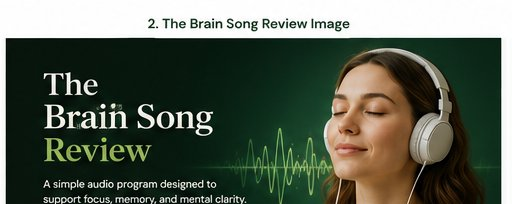
Disclaimer: This content is for informational purposes only and does not constitute medical advice. Consult a qualified healthcare professional before any new wellness program. Results vary.
Disclaimer: For informational purposes only. Not medical advice. Consult a qualified healthcare professional before any new wellness program. Results vary.
If you have started exploring audio-based brain wellness tools, you have almost certainly encountered two terms: binaural beats and isochronic tones. Both are used in brainwave entrainment programs. Both claim to support focus, relaxation, and mental clarity. But they work differently — and understanding those differences helps you choose the right tool for your needs.
What Are Binaural Beats?
Binaural beats require stereo headphones. They work by delivering a slightly different tone to each ear. Your left ear might receive a 200 Hz tone while your right ear receives a 240 Hz tone. Because your brain receives two slightly different signals simultaneously, it processes the difference between them — in this case 40 Hz — and produces its own internal oscillation at that frequency. This internal beat is the binaural beat. It does not exist in the audio itself. Your brain creates it.
The 40 Hz frequency is particularly significant because it corresponds to the gamma brainwave range — the highest-frequency brain state associated with focused attention, memory processing, and peak cognitive performance. Programs like The Brain Song use principles rooted in gamma-frequency entrainment research.
What Are Isochronic Tones?
Isochronic tones take a completely different approach. Rather than delivering split signals to each ear, they pulse a single tone on and off at a precise rate. If you want to entrain the brain to 40 Hz, the tone pulses 40 times per second — creating an explicit rhythmic pulse that the brain can follow. This means isochronic tones do not require headphones, though headphones generally provide a more immersive experience. The entrainment stimulus is external and audible rather than internally generated by the brain.
Key Differences at a Glance
Binaural Beats
- Brain generates the beat internally
- Requires stereo headphones
- More research published
- Gentler, more immersive experience
- Works well for relaxation and sleep
- Most studied for anxiety and meditation
Isochronic Tones
- External audible pulse — more direct
- Works through speakers or headphones
- Some argue stronger entrainment effect
- Better suited for active focus sessions
- Easier to use in varied environments
- Emerging but less studied than binaural
Which Is Better for Focus and Cognitive Performance?
For focus specifically — particularly gamma-range entrainment at 40 Hz — isochronic tones may provide a more direct and robust entrainment signal because the rhythmic pulse is explicit rather than internally computed. However, binaural beats at gamma frequencies have also shown effects on focus and cognitive performance in research settings.
Many well-designed audio brain wellness programs, including The Brain Song, use a combination approach — layering multiple entrainment techniques within a single audio track to maximize the potential for frequency-following response across different neural pathways. This is why comparing programs solely on "binaural vs isochronic" can be overly reductive — the full audio architecture matters.
Try a Gamma-Frequency Audio Program Today
The Brain Song and Genius Brain Signal are both designed around gamma brainwave science — try them risk-free.
Affiliate links · Results vary · Not medical advice · Disclosure
Which Should You Choose?
If you are new to brainwave entrainment and want to start with something well-studied and backed by more published research, binaural beats are a reasonable starting point. If you want something that can be used without headphones and may produce a more direct entrainment signal, isochronic tones are worth exploring. If you want a professionally designed program that uses multiple entrainment methods together in a structured daily audio session, a dedicated brain wellness program like The Brain Song or Genius Brain Signal is likely your best option — because the audio engineering handles the complexity for you.
Frequently Asked Questions
Related: Sound Therapy for Brain Focus · Gamma Brainwave Benefits · The Brain Song Review